
Birds on industrial ponds are usually responding to a simple visual cue: open water. From the air, produced water, wastewater, tailings, brine, evaporation, or containment ponds can look like usable habitat, even when the water is unsafe.
For a bird seeking rest, food, drinking water, or a migration stopover, that cue may be enough to invite an approach. Effective deterrent planning starts by understanding the attraction, then reducing landing confidence before birds arrive.
Why Birds on Industrial Ponds Are Attracted to Open Water
Birds use water for more than drinking. Wetlands and open water can provide feeding areas, shelter, nesting space, social gathering areas, and migration rest stops. The U.S. Geological Survey notes that birds use wetlands for drinking water, feeding, resting, shelter, and social interaction.
Industrial sites can accidentally send a similar signal. A large pond may stand out from the air, especially in dry, disturbed, or remote terrain where other water is limited. Birds are not choosing industrial ponds; they are reacting to a pond that can look like habitat before they know otherwise.

Why Birds on Industrial Ponds Can Become Risky
Industrial water is not necessarily habitat. Produced water, process water, wastewater, brine, tailings water, runoff, and other containment liquids may contain salts, hydrocarbons, metals, treatment chemicals, suspended solids, or other hazards. U.S. Fish & Wildlife Service guidance states that migratory birds may mistake oiled and produced waters for wetlands or safe water bodies and become entrapped.
Birds cannot reliably judge salinity, toxicity, oil sheen, liner slope, or process chemistry from above. Even short contact can create wildlife exposure, cleanup work, operational disruption, reporting concerns, or reputational risk. This is why birds on industrial ponds can become an environmental, HSE, and operations issue, not just a nuisance.

Migration and Seasonal Timing Matter
Bird pressure changes through the year. During migration, birds search for places to rest, feed, and regain energy. U.S. Fish & Wildlife Service describes stopover habitat as places where birds stop to rest, eat, and seek shelter from predators.
Weather, drought, nearby wetland conditions, freezing temperatures, crop harvest, and local water availability can all shift activity. A pond with little summer pressure may become attractive during a dry fall or migration pulse, so birds on industrial ponds are often easier to prevent than to move after a habit forms.
Why Random Deterrents Fall Short
Some sites begin with a few isolated scare devices because they are easy to buy and place. That may help in some settings, but large ponds create a coverage problem. One decoy, sound unit, light, or flag may not affect the whole landing zone.
Birds can also habituate to predictable deterrents. If a device stays in one place and never connects to real risk, birds may learn to ignore it. We cover that issue in Do Bird Deterrents Stop Working? Understanding Bird Habituation. To reduce birds on industrial ponds, the plan should account for pond size, approach paths, sightlines, weather, water-level changes, and inspection.
How Visual Disruption Helps
Visual deterrents are not sealed barriers. Their job is to make the pond look less open, less predictable, and less comfortable as a landing area. Movement, reflectivity, contrast, and visible lines over water can interrupt the cue that says open water. USDA APHIS guidance on bird dispersal notes that overhead lines in grid, parallel, or random patterns have been used to prevent bird access to feeding, loafing, or nesting areas.
Coverage matters. A pond bird deterrent over water should be planned around the areas birds actually see and use, not only convenient anchor points. Our Coverage vs. Density in Bird Control article explains why distribution across usable space can matter more than clustering deterrents in one section. For birds on industrial ponds, the key question is whether the surface still looks open enough to land.
Where Rise Tape Fits
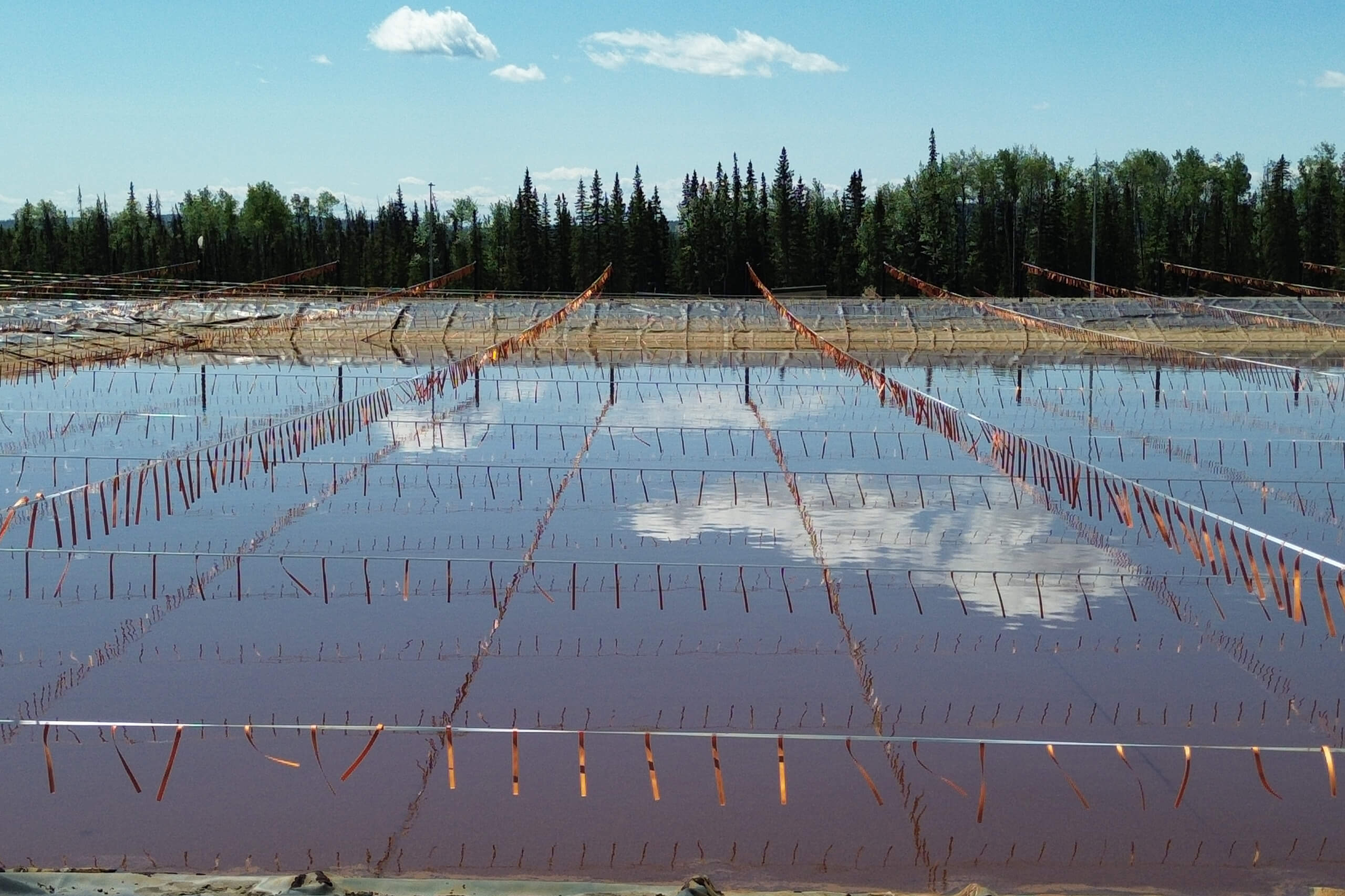
Rise Tape can be suspended over open water to add movement, reflectivity, contrast, and visible lines across the pond surface. For large industrial ponds, remote sites, containment rings, or irregular water bodies, passive suspended coverage may be practical where full covers or netting are difficult to install, access, or maintain. Our Bird Control Over Water with Rise Tape article describes its use over ponds, tailings ponds, produced water ponds, containment rings, and shorelines.
Rise Tape is not a sealed exclusion system like properly installed netting or a rigid cover. It is a visual pond bird deterrent that can help reduce landing confidence as part of a site-specific industrial pond bird control plan. For remote locations, it may be useful because it does not rely on power, sensors, or daily operator intervention; see Bird Deterrent for Remote or Unmanned Sites.
When Other Solutions May Be Needed
If complete exclusion is required, bird-safe netting, a cover, or a closed-loop system may be a better option. However, these solutions may not be practical for large ponds, and installation and maintenance costs can be significant. Netting systems can also trap birds, particularly if birds enter the enclosure or become entangled in the mesh, potentially resulting in injury, drowning, or starvation. Regular inspection and prompt removal of trapped wildlife are important parts of maintaining these systems.
High-pressure sites may also need active hazing, lasers, sound systems, wildlife management support, or a combination of methods. The right plan depends on species, pond size, risk level, access, anchoring options, regulations, maintenance capacity, and timing. Rise Tape’s Seasonal Bird Control: Preparing for Migration with Rise Tape explains why setup before migration often works better than reacting after birds arrive.
Conclusion
Birds on industrial ponds land because the strongest visual cue says water, not hazard. A good deterrent plan reduces landing confidence before birds establish a habit, using the right mix of visibility, coverage, timing, inspection, and exclusion. If birds are landing on a pond, containment area, or industrial water site, Rise Tape can help you evaluate whether suspended visual coverage is a practical fit.