
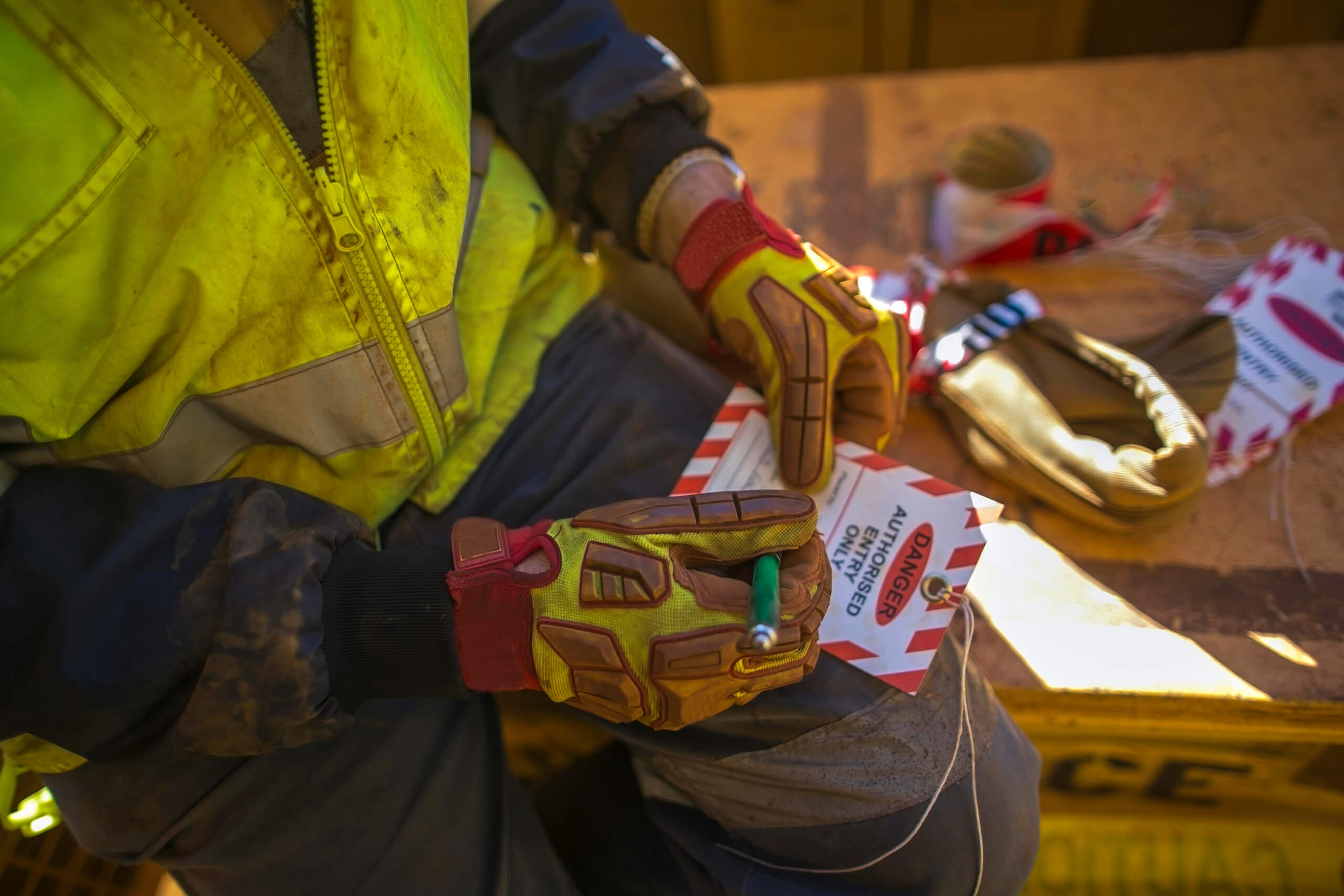
Barricade tags explain the hazards and access requirements for a particular work area. Colour-coded boundaries help workers familiar with the site’s conventions recognize marked zones before individual tag details become readable. On sites with several nearby work areas, the combination provides both an overview of the marked zones and specific information for the area someone needs to enter.
Several Zones, Different Information Needs
Imagine a maintenance shutdown with three separate work areas marked off beside a designated walkway. Pump and valve crews have separate zones using the same site-defined flagging colour, while a third zone uses a different colour indicating no entry. A technician following the walkway can recognize the boundaries and their restriction categories without approaching every tag.
Barricade tags can also carry colour and prominent signal words. The additional benefit of colour-coded flagging is that the cue extends along the visible perimeter, connecting the restriction category to the area it covers. The meanings depend on the established site convention. Our guide to using Rise Tape as a colour-coded barricade system covers that standardization.
Barricade Tags Explain the Individual Zone
In the maintenance shutdown example above, the pump and valve work areas share a flagging colour but may involve different hazards, responsible crews and entry requirements. Their barricade tags provide those job-specific details. A common colour does not mean the same instructions apply to both areas.
When the technician needs access to one zone, its tag provides information to use alongside the applicable permit and site procedure. Colour supports recognition on approach, but it does not authorize entry. Written information also gives workers an explicit message rather than relying on colour recognition alone, consistent with health safety guidance against using colour as the sole means of coding.
The Boundary Material Matters Too
Because colour coding carries the visual message beyond individual tags, the material marking the perimeter deserves consideration too. The question is not just which colour represents the restriction, but how well the boundary remains visible and intact throughout the job, especially in varying lighting and weather conditions. Barricade tags also need materials and markings suited to those conditions, so their hazard and access information stays readable.
Material quality is particularly important for reusable barricade tape, which needs to hold up across multiple jobs. Prolonged weather exposure and repeated handling can gradually affect its strength and visibility, making resistance to weathering and wear important considerations.
Combining Rise Tape With Barricade Tags
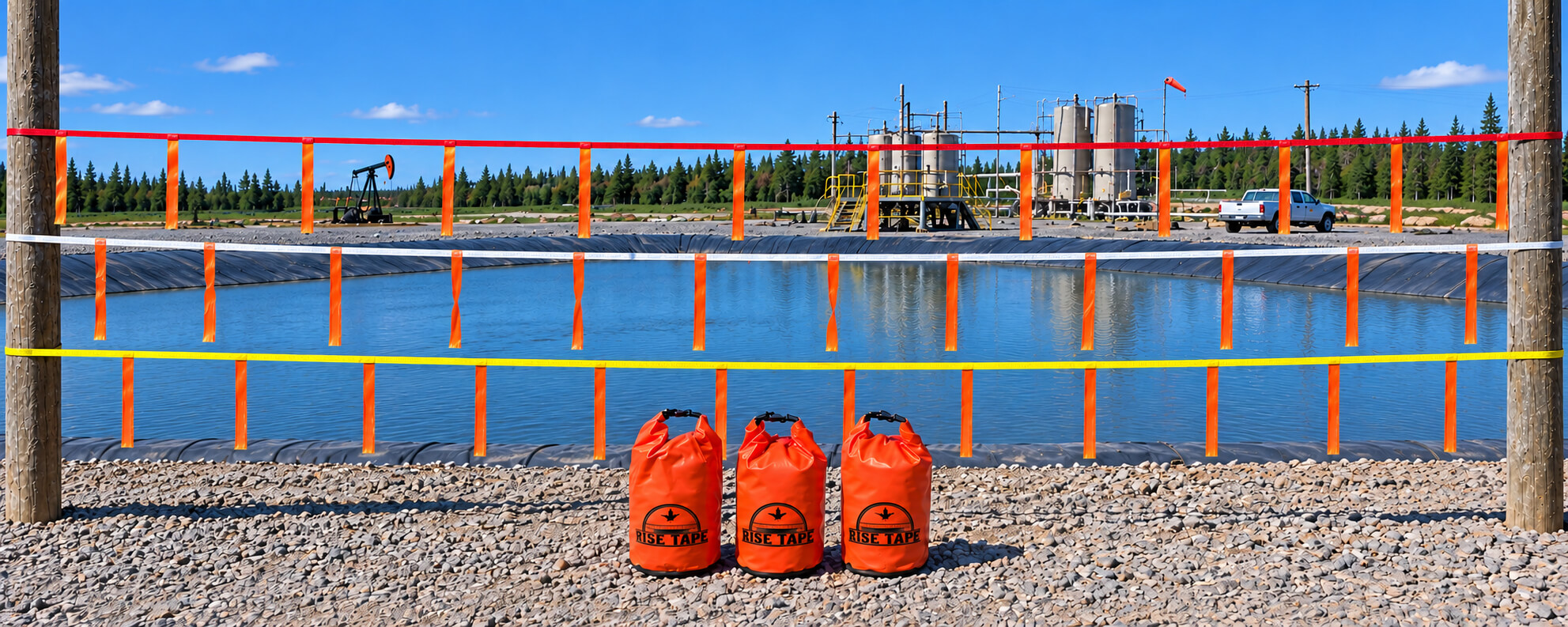
Conventional caution and danger tapes provide the same basic colour cue, but thin, single-use plastic tapes can tear, sag and require repeated replacement. Rise Tape offers a durable, reusable alternative built around a woven polyester mainline with a tensile strength of approximately 2,500 lb. The mainline comes in red, yellow and white, allowing sites to apply their established colour convention. Its attached UV-resistant flags feature reflective striping that helps the boundary stand out in darker conditions when illuminated by job-site lighting.
In the maintenance shutdown example, each crew’s boundary may be needed for a different period. Once an area is released and removal is authorized, a reusable line can be retrieved and redeployed for another job, with the appropriate tags and access requirements for that location. Rise Tape Barricade Bags keep the line attached to a portable waterproof bag for retrieval, transport and reuse.
Summary
Colour-coded boundaries help workers recognize nearby marked zones, while barricade tags explain the particular area they need to access. For recurring work, the boundary material’s durability, reusability and reflective visibility deserve consideration alongside the tagging procedure. Explore Rise Tape Barricade Bags for a portable, reusable alternative to disposable tape.