
Shutdown, turnaround and outage (STO) safety depends on temporary boundaries keeping pace with the work. During STO events, work fronts move, access routes change and crews cycle through the site. A boundary that is visible but outdated can be as confusing as one that has failed completely. This article covers why temporary boundaries lose credibility, how to select the correct level of control and when a reusable system makes more sense than disposable tape.
Treat Boundary Management as a Live STO Task
STO boundary plans rarely survive execution unchanged. Inspection findings add scope, staging areas move and completed work releases space to the next crew. That makes boundary management an ongoing STO task, not something completed before the first shift. Every active line needs a clear purpose, an owner and a process for moving or removing it when the work changes.
Why Temporary Boundaries Undermine Safety
Most boundary problems are operational rather than complicated:
- Work fronts move but the line does not
- Temporary access points are opened and never restored
- Several contractors alter the same perimeter
- Weather or traffic damages lightweight tape
- Obsolete lines remain after work is complete
- Nobody owns inspection, recovery or removal
Once workers have to guess whether a line is active, all temporary markings become easier to ignore. Shutdown, turnaround and outage safety improves when boundary status is included in shift handovers and area ownership.

Shutdown, Turnaround and Outage Safety Requires the Correct Control
A visible line can warn people, guide movement or communicate an access rule. It does not necessarily prevent a person, vehicle or falling object from crossing the boundary.
The Canadian Centre for Occupational Health and Safety hierarchy of controls distinguishes awareness systems from controls that isolate workers from hazards. The site assessment should determine whether an area needs a visual warning, rigid barricade, guardrail, fencing, vehicle-rated protection or another approved control.
Where a visual line is appropriate, it still needs the signs, tags and procedures required by the facility. It should never be presented as engineered protection unless the complete system has been designed and approved for that purpose.
Disposable Tape or a Reusable Boundary Line?
Disposable tape is practical for a short, one-time task in controlled conditions. A STO safety review should weigh its limitations when a perimeter stays outdoors, moves repeatedly or must be rebuilt after damage.
| Consideration | Disposable tape | Reusable boundary line |
| One-time task | Often suitable | May be unnecessary |
| Repeated relocation | New material is usually required | Can be recovered and moved |
| Outdoor use | May tear, twist or sag | Durability depends on the product |
| End of task | Usually discarded | Must be retrieved and stored |
| Cost comparison | Purchase price plus replacements and labour | Purchase price plus recovery and storage |
The relevant comparison is not simply the price of a roll. Include replacement material, reset labour, cleanup, transport, storage and realistic reuse frequency. See common barricade tape applications for a broader comparison.

What to Evaluate Before the STO Starts
Keep the equipment review focused on operating conditions:
- Visibility: Will the line stand out against the site background and in low light?
- Movement: How often will crews open, relocate or rebuild it?
- Exposure: Will it face weather or frequent handling?
- Scale: Is it a short approach line or a long, irregular perimeter?
- Ownership: Who will inspect, update, retrieve and store it?
- Protection: Is a visual boundary enough for the assessed hazard?
These questions connect purchasing decisions to how the equipment will actually be used during the event.
Where Rise Tape Fits
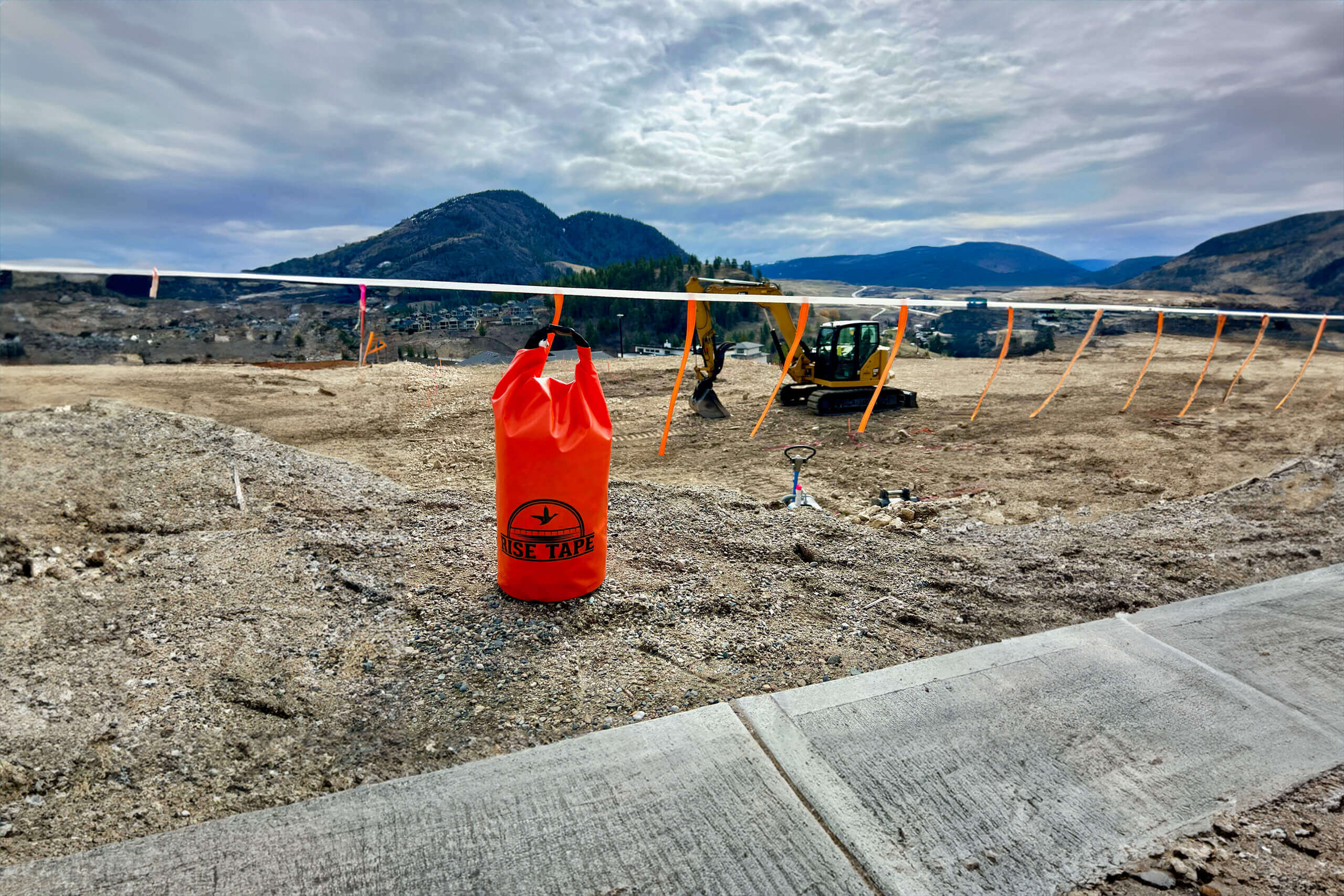
Rise Tape is a reusable boundary line built around a woven polyester mainline with high-visibility flags and reflective striping. Red, yellow and white mainline options are available so sites can select a colour that fits their established system. With a tensile strength of approximately 2,500 lb, Rise Tape can also be used as a rope guardrail where that application is appropriate for the hazard and permitted by site requirements.
Rise Tape Barricade Bags come in 50ft, 100ft and 250ft lengths. The line stays attached to a portable waterproof bag, helping individual crews deploy, retrieve and store it as one unit. This format suits changing work fronts and shorter temporary zones.
Rise Tape is most relevant where disposable tape is repeatedly replaced, moved or rebuilt. It does not determine the required level of protection; the facility still decides where a visual line is suitable and where an engineered barrier is necessary.
Keep the Boundary Aligned With the Work
Shutdown, turnaround and outage safety is not improved by a durable boundary that is obsolete or used for the wrong purpose. Select equipment for the environment and frequency of change, assign ownership and remove lines as soon as they no longer apply.
Preparing for an STO event? Consider Rise Tape Barricade Bags for portable crew-level deployment and easy relocation between work fronts.