
Large pond netting is not just small netting scaled up. A small pond may only need short spans, simple edge attachment and easy access for maintenance. A large industrial pond is different. As dimensions increase, the plan has to account for span length, sag, anchors, wind, snow or ice, water level changes, installation logistics, inspection and maintenance.
Netting can make sense when a site needs physical exclusion. The key question is whether the system can be installed, tensioned, inspected and maintained at the scale of the pond. For decision makers comparing bird deterrent pond covers, bird control pond covers or another pond bird deterrent, pond size changes the whole planning conversation.
What Changes As Pond Size Increases
The difference is not simply residential versus industrial, or containment ring versus pond. The real difference is footprint. A smaller industrial pond may still be relatively straightforward if the edges are reachable, support points are close together and the cover can be inspected from the perimeter.
Large pond netting over a broad industrial pond raises more variables. Produced water ponds, wastewater lagoons, tailings ponds, brine ponds, evaporation ponds and runoff ponds may have liners, berms, steep slopes, restricted access, changing water levels and perimeter safety rules. The larger the pond, the more each layout decision affects labour, hardware, tension and maintenance.
Why Large Pond Netting Gets More Complicated
While not all netting systems are custom or that netting cannot cover large ponds, many large pond netting systems are planned around pond dimensions, target species, edge conditions and support requirements. What it means is that large pond netting often becomes a site layout project, not a simple product purchase.

Planning Factors That Matter More at Scale
Span length is usually the first issue. Longer spans give material more distance to sag, move in wind, collect snow or lose clearance above the water. Sag can create contact points, reduce effectiveness or make the system harder to inspect from shore.
Anchors, support hardware and access matter just as much. Large pond netting may require edge support, cabling, perimeter hardware or structural attachment points. Anchor locations need to be practical for installation and safe for crews to access later.
If a cover needs repair, retrieval or cleaning, how will crews reach the problem area? If equipment has to work near a liner, berm, restricted zone or changing water level, the maintenance plan may matter as much as the initial material cost.
Where Pond Netting Might Make Sense
Large pond netting may be the right choice when a site requires complete physical exclusion rather than deterrence. A properly designed and maintained netting system can physically exclude selected bird species from accessing the water. The appropriate mesh size and support system depend on the species being deterred, which may be important for high-risk ponds, sensitive species, or sites with strict wildlife protection requirements.
California’s Salton Sea Ecosystem Restoration Plan notes that complete enclosures using screening mesh or netting are considered highly effective for smaller waterbodies. However, the same report also notes that as pond size increases, support structures, materials, construction, storm damage, maintenance, deterioration, and overall cost can become significant design considerations.
The Wildlife Risk If Netting Fails
Netting also has to be maintained as a wildlife-control system, not just installed as a cover. U.S. Fish & Wildlife Service guidance recommends covering open containers in a way that does not entangle or trap birds and remains intact above the liquid surface. Waterfowl management guidance also notes that birds can become entangled in netting or wire and drown.
On large ponds, that risk becomes another design consideration. If a gap, tear, sagging section, or loose edge allows birds into the enclosure, they may be unable to find their way back out. Trapped birds can drown, become vulnerable to predators, or die from starvation if they cannot escape. This is why regular inspection, maintenance, and timely repairs are essential parts of any large pond netting system.

Where Rise Tape May Be Simpler
Rise Tape is a suspended visual bird deterrent that adds movement, reflectivity, contrast and visible lines over the water surface to help reduce landing confidence.
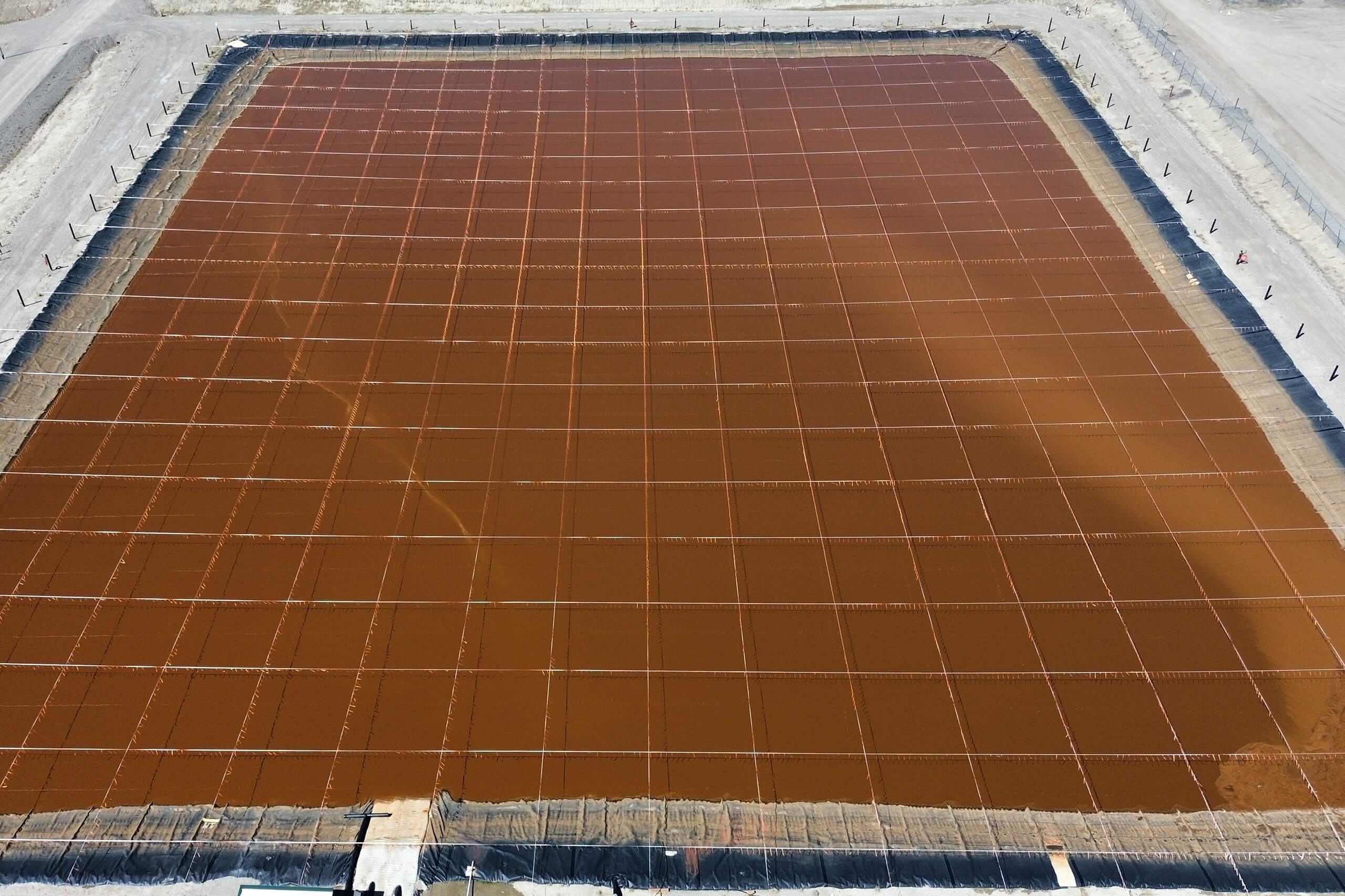
For large industrial ponds where full netting is impractical or more exclusion than the site requires, Rise Tape may be more cost-effective because the design, installation and maintenance are simpler. Rise Tape Totes come in standard 2,500 ft lengths and can be shortened in the field. For pond installation, each mainline run typically needs just one anchor point on each side of the pond. Coverage scales by adding mainline runs rather than ordering a custom-fitted cover. Rise Tape has been field tested across spans up to 250 m with minimal sag.
What a Large Pond Looks Like in Practice
A 250 m x 250 m pond covers 62,500 square metres, or about 15.4 acres. Each side is roughly 820 ft long. At that size, large pond netting involves material area, support structure, access, loading, installation sequence and inspection routes.
The same pond shows why a field-adjustable mainline system can be useful for some industrial pond bird control plans. A site can evaluate how many suspended runs are needed, where anchors can safely be placed and whether the goal is full exclusion or reduced landing confidence. If complete exclusion is absolutely required, netting or another cover may be the better fit. However, if broad deterrence is the goal, Rise Tape would be the more practical and cost-effective option.
Conclusion
Large pond netting can be a valid solution, but pond size changes the bird-control plan. As spans grow, the decision becomes less about product category and more about support, access, sag, wind, wildlife risk, inspection and the level of exclusion required. For large pond bird-control layouts, contact Rise Tape to discuss span length, anchor points and product quantities.