
As urban and industrial areas expand, conflicts with birds are becoming more frequent. In response, some facility managers and municipalities are exploring bird birth control as a non-lethal method of population management. But how effective is it, what are the risks, and are there better alternatives?
What Is Bird Birth Control?
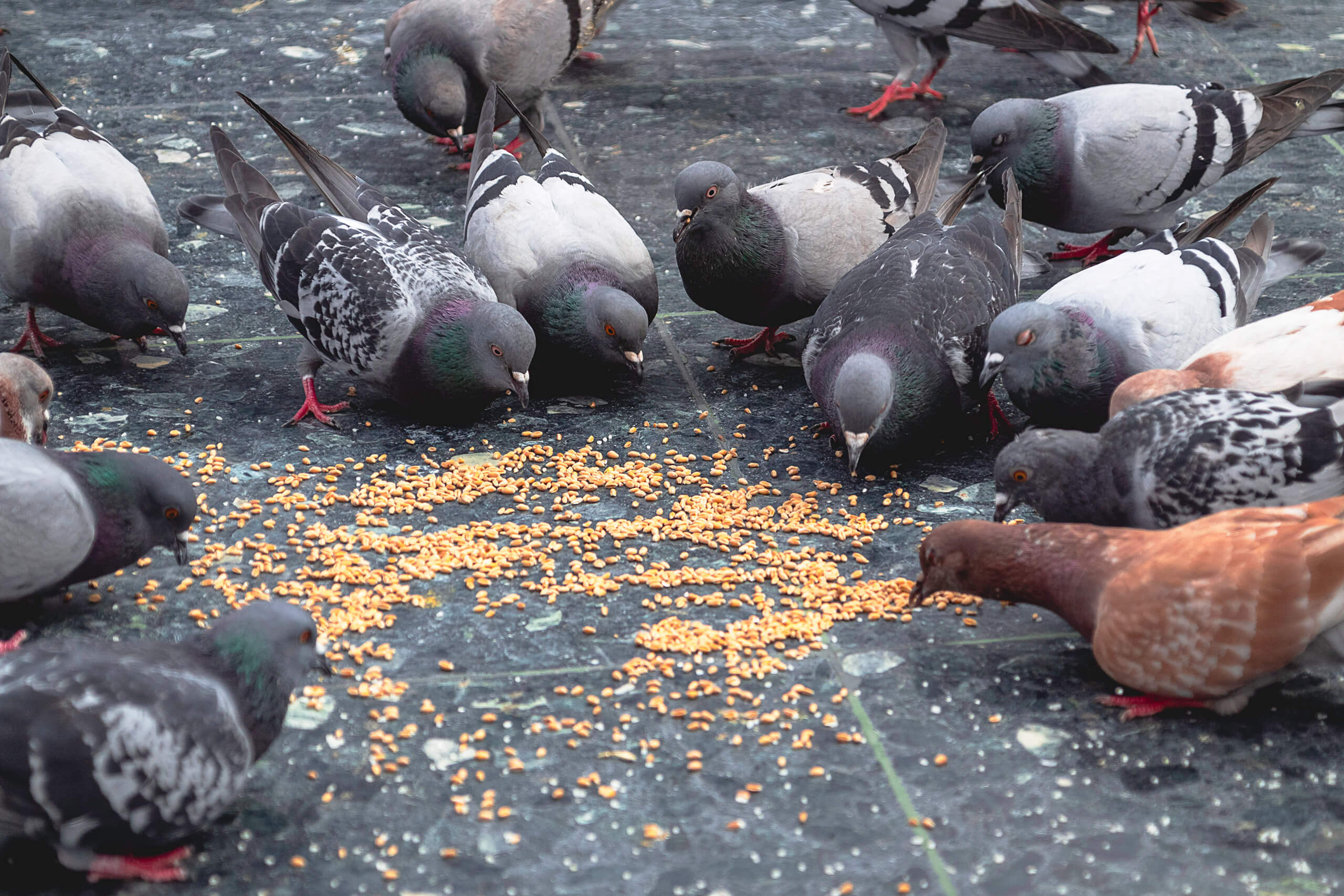
Bird birth control uses a chemical compound, typically nicarbazin, added to bait to prevent egg fertilization. When consumed daily, it reduces hatch rates and gradually lowers populations. While not acutely toxic, nicarbazin is biologically active and its effects are reversible once dosing stops.
It has shown contraceptive effects in pigeons, chickens, and some geese, but is only practical for flocking species that can be trained to consume bait consistently. Most wild birds are unlikely to ingest enough to produce results.
Unlike visual deterrents, this method doesn’t stop birds from landing or roosting; it merely suppresses reproduction and depends on sustained human involvement.
Scientific Evidence of Effectiveness
Several studies have evaluated the use of avian contraceptives:
- A field study cited by Health Canada reported a 53% reduction in pigeon numbers within the first year of using treated bait, with greater reductions over subsequent years (Health Canada, PRD2017-01).
- An 8-year multi-town study in Catalonia, Spain found a 12% average annual reduction, with diminishing returns over time (González-Crespo, 2024).
- A study at Metro Vancouver SkyTrain stations found that pigeon populations increased at control sites where cracked corn was provided, while populations remained stable at treated sites receiving bird birth control bait. This stability may indicate some population suppression, but it also raises the possibility that daily baiting could attract new pigeons to treated areas, limiting overall decline (UBC, 2021).
These results suggest that bird birth control can be effective under the right conditions, but it is not a quick solution and requires long-term investment.
Claimed Benefits
Proponents often highlight the following advantages:
- Non-lethal and reversible: Does not kill birds or permanently sterilise them.
- Reduced public backlash: Viewed as more humane than culling.
- Useful in sensitive sites: Can be used on rooftops, heritage buildings, or facilities where physical deterrents are impractical.
Ethical and Practical Concerns
Despite its humane framing, chemical population control raises several concerns:
- Interfering with nature: Suppressing reproduction does not address the root causes of overpopulation, such as food access and nesting availability. It alters wildlife biology for human convenience.
- Ecological impact: Pigeons are a food source for urban raptors like peregrine falcons. Reducing prey species can disrupt local food chains.
- Program dependence: Daily baiting must continue indefinitely to maintain effectiveness. If feeding lapses, fertility returns. Because the contraceptive is delivered through food, the program essentially functions as a feeding station, which can attract or retain birds that might otherwise leave, undermining the goal of population reduction.
- Non-target exposure: While low when baiting is properly managed, errors can expose pets, songbirds, or other animals to unintended effects.
- Public transparency: Many programs are deployed without informing residents. This lack of consultation raises ethical concerns, especially when the method involves chemical intervention in public spaces.
Legal and Regulatory Considerations
In Canada, any chemical population control must be registered with Health Canada’s Pest Management Regulatory Agency (PMRA). Improper use may violate wildlife laws, especially the Migratory Birds Convention Act, which protects most native bird species.
Internationally, similar restrictions apply. In the U.S., avian contraceptives must be registered with the Environmental Protection Agency (EPA) and can only be applied by licensed professionals. The EU and Australia also restrict or limit use due to environmental and ethical concerns.
Alternatives to Bird Birth Control
Visual Deterrents
Products like Rise Tape, a durable reflective bird deterrent, create motion and light disturbances that discourage birds from landing or roosting. Unlike regular bird tape or survey ribbons, Rise Tape is engineered for industrial and commercial environments, with heavy-duty materials, reinforced mainlines, and longer-lasting performance without ongoing maintenance. It provides immediate, species-wide deterrence without ongoing baiting, licensing, or regulatory overhead. Once properly installed, it requires minimal maintenance, making it ideal for infrastructure, agriculture, and unmanned sites.

Habitat Modification
Long-term success comes from reducing access to food, water, and shelter. Sealing entry points, limiting garbage exposure, and modifying roosting areas can naturally encourage birds to relocate.
Integrated Approach
In rare, highly controlled environments, bird birth control may complement physical deterrents, but only when supported by consistent funding, regulatory approval, and public awareness.
Conclusion
Bird birth control is a scientifically validated but slow-acting method that raises ethical, legal, and ecological questions. For most sites, the best results come from physical deterrents like Rise Tape, paired with environmental management that discourages roosting and feeding. A humane solution should guide birds away, not suppress their biology.