
If a bird deterrent does not move, change, or surprise, birds usually figure it out. Static devices often work briefly because they are new, then fade as birds learn they are harmless. Movement matters in bird control because it keeps the cue noticeable and uncertain, which is especially important on open sites like ponds, reservoirs, fields, and industrial yards.
Birds Learn Fast, And Static Becomes “Safe”
Many deterrents rely on a strong first impression. Birds hesitate around something unfamiliar, then slowly test it. If nothing ever happens, the object becomes part of the scenery.
This is one reason frightening devices are widely described as short-term tools rather than a permanent fix. A USDA Wildlife Services paper on frightening devices notes that these methods typically provide temporary relief and that birds can habituate with repeated exposure.

Movement Works Because It Creates Uncertainty
Movement makes a deterrent harder to ignore and harder to figure out. It can look less like a sign and more like something active in the environment.
A USDA National Wildlife Research Center publication notes that animated devices are more likely to draw attention and create uncertainty than static ones, and that effectiveness drops when birds repeatedly experience a stimulus that never escalates. The practical takeaway is simple: motion helps, but birds can still learn predictable motion. Variation is what stretches results.
What Kind Of Movement Helps
Not all motion is equally useful. Some bird control systems only create movement at one point, while others do so across a footprint. The most useful movement usually has three traits:
- Irregular: not perfectly rhythmic
- Frequent: something changes often enough to stay noticeable
- Site-Scaled: visible from approach paths and landing zones
If birds can approach, land, and loaf without ever passing through the busy visual zone, they will.
Why Reflective, Fluttering Materials Get Noticed
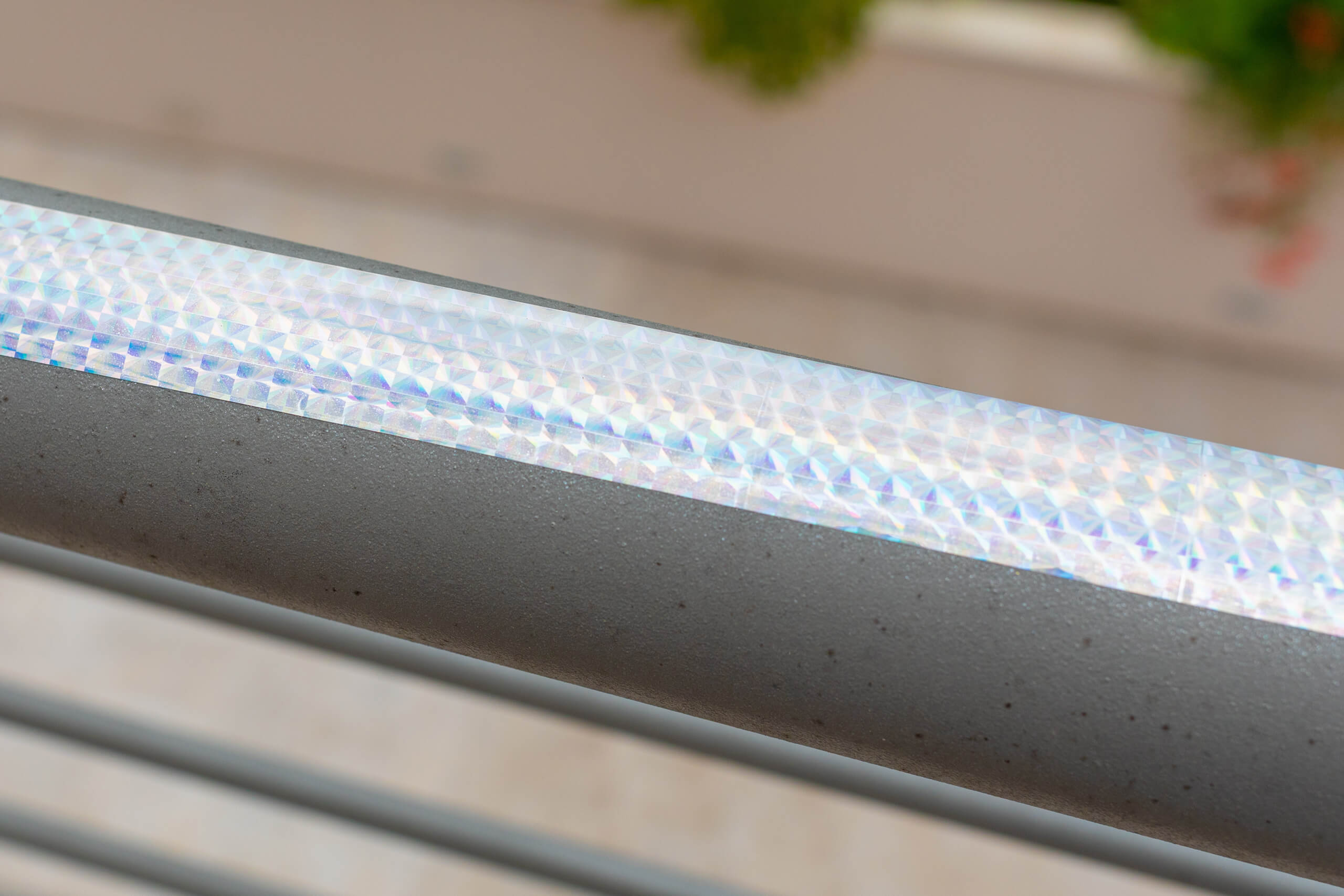
Reflective materials are most effective when they do more than shine. When they twist and flutter, they create constantly changing flashes and angles.
A field study in Wildlife Society Bulletin evaluated reflecting tape and described strong visual effects in wind. In one sunflower trial, the authors reported that virtually no parakeets entered the plot for 15 days after installation and no additional damage occurred, while some birds still found ways to feed by going beneath the ribbon. That’s one reason coverage, spacing, and orientation matter: gaps can give birds an easy path through.
A Quick Note On Bird Vision
Birds can be more sensitive to rapid visual change than people. In an open-access study on budgerigars, researchers measured flicker fusion frequency and reported a highest measured value of 93 Hz, while noting that humans typically detect flicker at lower frequencies, around 50–60 Hz. That means some birds can notice faster flicker and subtle flashing that humans might not even register, which explains why small movement and flashing can look like a lot more to a bird.
Motivation Matters
It is easier to move birds that are casually loafing or opportunistically feeding than birds that are nesting or strongly attached to a site. That is why deterrents tend to work best when they are in place before birds start scouting and choosing nest sites.
A study on mylar flags found they were ineffective at deterring herring gulls from nesting colonies, but they reduced gull use of loafing areas in at least one setting. This suggests that if birds are already nesting, they are more motivated to tolerate disturbance, so deterrence usually needs to be more deliberate and sustained.
Make Motion Last Longer On Site
Put movement where birds decide. Protect approach routes and the landing zone, not just the spot you want them to stop using.
Change something on a schedule. Small adjustments help prevent a “safe pattern” from forming: move the device, tweak spacing, rotate the visual elements, or change height.
Pair deterrents with site management. If the area offers reliable food, water, shelter, or perching, birds are more motivated to tolerate discomfort. Long-term results usually improve when deterrents are combined with practical attractant reduction, not used alone.
Where Rise Tape Fits
On open sites, a single moving device can be easy for birds to work around. A span-based approach can be harder to ignore because it creates movement across the area birds want to use.
Rise Tape is a tensioned span system with high-visibility reflective flags designed to create distributed, wind-driven motion over ponds, reservoirs, and other industrial environments. Because wind speed and direction shift, each flag twists and flutters differently, so the flashes change moment to moment instead of repeating in a fixed pattern. With sufficient coverage, it can help reduce landings by making the surface area feel visually active and less predictable.

Summary
Static deterrents often fade because birds learn they are harmless. Movement is critical in bird control because it keeps cues noticeable and uncertain, but predictable motion can still be learned. For better results, scale motion to the site, place it where birds make landing decisions, make occasional changes, and reduce what is attracting birds in the first place. For open-water and large-footprint sites, a distributed span system like Rise Tape can be a practical way to keep motion present across the area instead of at a single point.