
Some bird deterrents have the potential of harming wildlife if they’re the wrong fit, used or maintained improperly, or deployed at the wrong time. This guide identifies some of the high risks methods, explains how they work, what can go wrong, for birds and other wildlife, and when to favour safer, non‑contact alternatives.
Sticky Gels
How it works: A thin, tacky layer of polybutene is applied to ledges or pipes so footing feels uncomfortable and birds avoid landing.
Risks: Sticky residues can transfer to feathers and ruin waterproofing and insulation, leading to hypothermia or flight failure, which could be fatal. Small birds can become stuck. The same tackiness can trap small mammals, reptiles, and bats. Residues are difficult to remove and can spread via debris or weathering if misapplied.
Source: U.S. EPA — Polybutene Resins Pesticide Fact Sheet (1995)
Netting That’s Loose, Large‑Mesh, Or Poorly Maintained
How it works: Netting is stretched over openings or façades to physically block access; performance depends on mesh size, tension, and sealing at edges.
Risks: Sagging panels, oversize mesh, gaps, and poor edge sealing can entangle both target and non-target species. Entangled animals can potentially sustain severe injuries such as broken bones and lacerations, and die from blood loss, strangulation, dehydration and predators. When netting frays or detaches, it becomes plastic litter that can continue to trap wildlife. Bats are particularly vulnerable to inappropriate mesh. Risks rise rapidly without routine inspections and tension checks.
Source: NSW Dept. of Primary Industries — Netting SOP; Conservation Evidence — Bat entanglement in netting

Line Systems: Ledge Wires And Overhead Wire Grids
How it works: One or more wires sit just above a ledge or span across open areas; the reduced landing space and perceived obstacle discourage larger birds from settling.
Risks: Properly tensioned stainless wire is lower risk, but slack, near‑invisible line, such as monofilament, or broken strands can snare small birds and become persistent debris. If line reaches waterways, it can entangle fish, turtles, and marine mammals. Good maintenance, such as collecting off‑cuts and broken line, is essential.
Source: USDA APHIS — Gulls: WDM Technical Series; Florida Fish & Wildlife — Entanglement Prevention
Chemical Frightening Baits (4‑Aminopyridine)
How it works: 4‑Aminopyridine is a fast-acting neurotoxin. Chemically treated bait is placed where birds feed; some birds ingest it and display acute distress reactions, usually resulting in respiratory failure or cardiac arrest, which frightens the rest of the flock.
Risks: Birds that eat treated bait often die; non‑target birds may be affected. Mammals and pets are also highly susceptible to 4‑AP. Labels and risk docs caution against drift and runoff to water and emphasize strict handling to prevent secondary exposure.
Source: USDA APHIS — Use of 4‑Aminopyridine; US EPA — 4‑Aminopyridine Hazard Summary
Toxicant Baits (DRC-1339)
How it works: A restricted‑use avicide bait applied by trained personnel to target flocks. It is slow‑acting, so birds usually die off‑site hours to days later.
Risks: Non-target species can be affected if they ingest bait; labels warn of high acute toxicity to non‑target birds and aquatic invertebrates, so avoid spills, runoff, and use near water. Published assessments indicate low secondary‑poisoning risk to scavengers because the compound is metabolized before death, but careful carcass retrieval is still required.
Source: APHIS risk assessment on DRC‑1339
Loud Acoustic Devices
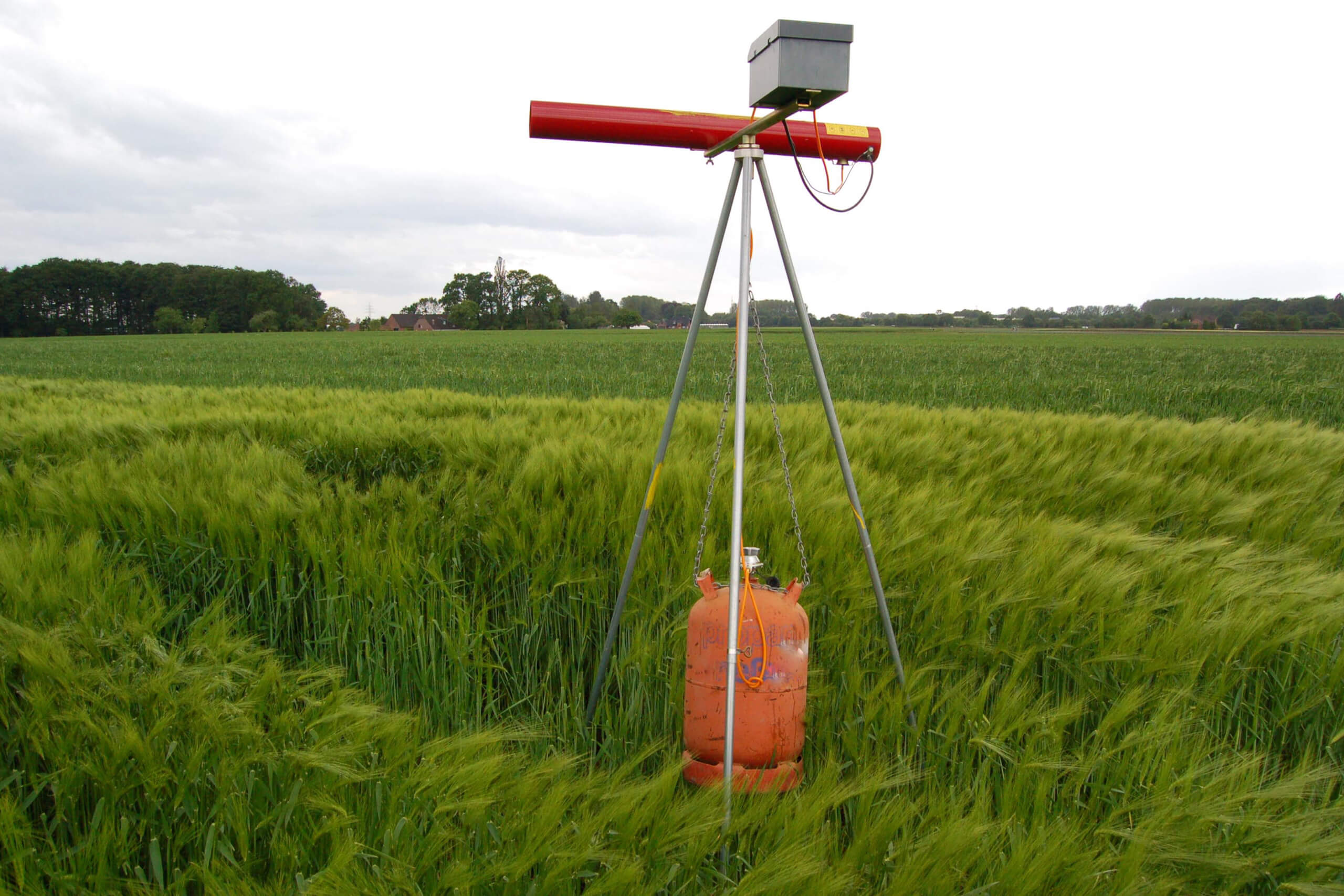
How it works: Propane cannons or electronic speakers produce sudden blasts or distress calls at intervals to startle birds away.
Risks: Chronic or intense noise disrupts feeding, communication, and parenting in birds; near active nests it can cause disturbance. The effect zone is hard to bound as sound travels and reflects, so disturbance can occur hundreds of meters away, including to non‑target wildlife. Consider community noise impacts as well.
Source: Systematic review — Anthropogenic Noise Impact on Avian Species (2024)
Drones Used For Hazing
How it works: Small remotely piloted aircraft are flown toward loafing birds or along approach paths to push flocks off site.
Risks: Flying over colonies or active nests can flush adults, risking egg/chick loss and potential legal violations. The moving effect zone makes buffers unreliable; species may react at long distances. Drones can also disturb non-target species such as marine mammals near haul‑outs and rookeries.
Source: U.S. Fish & Wildlife Service — Keeping Wildlife Safe from Drones; NOAA Fisheries — Viewing Marine Life
What To Favour Instead
Start with low‑risk, non‑contact options that don’t touch animals, leave residue, or add chronic noise. Visual deterrents often meet that bar when paired with routine inspections and good housekeeping, such as removing food and water attractants.
Where Rise Tape Fits
Rise Tape uses a heavy-duty mainline with reflective flags that move and flash in the breeze, creating motion and flashes that birds avoid. It’s non‑contact, quiet, and leaves no residue, so the injury and disturbance risks are extremely low. It scales well in large open fields and even across bodies of water, as long as there’s clear line‑of‑sight. Because its effect is visual and local, the zone of influence is predictable and bounded, lowering disturbance risk near active nests.

Summary
Different bird‑deterrent systems can pose risks to avian and non‑avian wildlife, from entanglement and residue transfer to noise disturbance, toxic exposure, and long‑lived debris. The best practice is to assess the specific risks for your site and choose safer alternatives first. Prioritize quiet, non‑contact options with a bounded, predictable zone of influence and straightforward upkeep. Not only does Rise Tape fits that profile, it is extremely versatile and durable. To learn more about Rise Tape, click the button below.