
As environmental awareness grows, more companies and individuals are seeking bird control solutions that are both eco-friendly and humane. While many traditional bird deterrents offer short-term effectiveness, there are greener alternatives that provide lasting protection without harming ecosystems. In this article, we’ll explore the principles of sustainable bird control and explain why Rise Tape stands out as a leading solution in this space.
Why Eco-Friendly Bird Control Matters
Bird control often walks a fine line between protection and preservation. While birds can cause property damage, agricultural loss, and health hazards, they’re also an essential part of ecosystems. This is why bird control strategies must avoid harming birds, non-target species, and the environment.
Chemical repellents and lethal methods can contaminate water sources, harm or kill unintended species, and even cause long-term ecological damage. The U.S. Environmental Protection Agency and various conservation bodies advocate for the use of non-toxic, humane deterrents whenever possible.
What Makes a Bird Control Method Eco-Friendly?
To qualify as eco-friendly, bird deterrents should meet criteria such as:
- Non-toxic and free from harmful synthetic additives.
- Humane: does not physically harm birds or interfere with natural behaviours.
- Reusability or longevity: reduces waste and replacement cycles.
- Minimal environmental impact: safe for nearby wildlife, pets, and waterways.
- Low or no energy usage.
- Compliance: aligns with local wildlife laws, licences, and protected-species rules.
Products that meet these standards are especially important in regulated areas such as organic farms, wetlands, or protected habitats.
Common Eco-Friendly Bird Control Methods
Visual Deterrents
Examples: Reflective tapes, predator eye balloons, decoys, holographic flashers. Read our evidence-based review of common visual bird deterrents.
Pros: Non-lethal and low energy. Quick to deploy and scale across long spans or sensitive areas where powered hardware isn’t desirable. When installed with clear sight-lines, visual cues interrupt flight paths and can reduce perching and loafing with minimal disruption to non‑target wildlife.
Cons: Effectiveness depends heavily on placement, coverage, and periodic pattern or geometry changes to limit habituation. Low-grade deterrents tend to degrade or detach in weather, creating litter and reducing performance. Choosing durable products reduces waste over time. Can

Sound-Based Deterrents
Examples: Distress calls, predator sounds, ultrasonic devices, and sound cannons.
Pros: Can project coverage over large open areas and be scheduled for specific times. For example, short hazing windows during peak activity. Systems with species-appropriate libraries allow some site tailoring and can be deployed temporarily without permanent infrastructure.
Cons: Requires power or propane for operation and may disturb other animals or humans. Sound cannons can become a source of noise pollution and complaint if deployed near populated areas. Studies have shown inconsistent results, with many animals quickly habituating to sound-based deterrents and ignoring them. Furthermore, most birds are incapable of perceiving ultrasonic sound. Call-based devices are also species‑specific, using the wrong calls or deploying them in mixed‑species settings often reduces effectiveness.
Physical Barriers
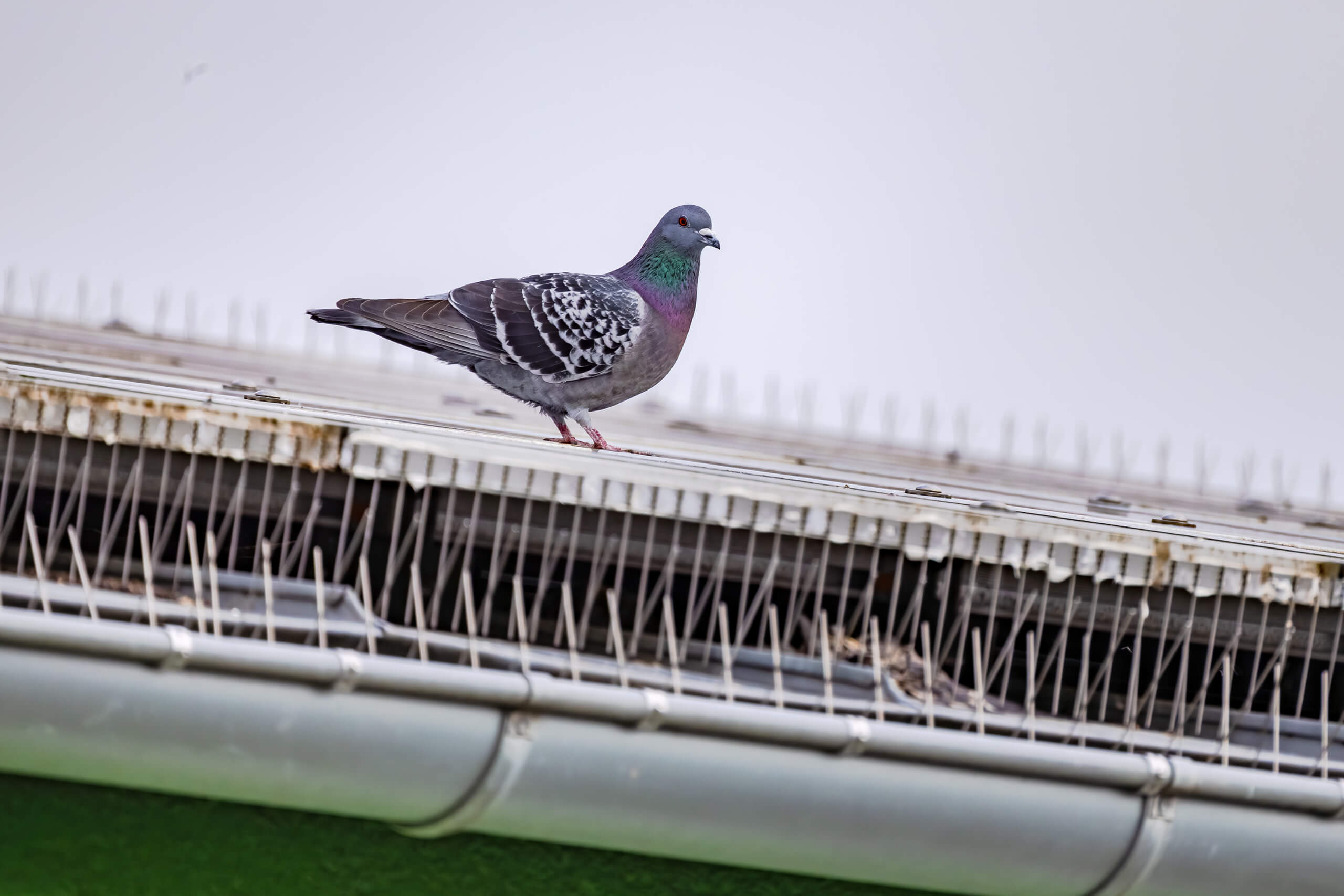
Examples: Bird spikes, netting, bird wires, electric tracks.
Pros: Creates immediate exclusion at fixed points such as ledges, signs, and beams. Properly specified and tensioned, high‑quality materials can provide long service life with predictable results for small, defined areas.
Cons: Often impractical over waterbodies or large spans. Spikes protect only narrow footprints and birds may perch adjacent to them. Poorly specified netting can entangle wildlife and adds plastic waste if it degrades; several jurisdictions promote wildlife‑friendly netting standards. Electric tracks require power and careful installation to avoid non‑target exposure.
Natural Landscaping
Examples: Habitat modification, removal of food and water sources, pruning of roost trees, waste management.
Pros: Passive, non‑toxic, and long‑term. Reduces attractants at the source, which can lower pressure on surrounding areas. Complements other low‑energy deterrents and supports broader site stewardship goals.
Cons: Requires space, planning, and ongoing maintenance; results can take time and may be constrained by site use , such as industrial protocols, commercial operations, or safety requirements. Landscaping changes may shift, rather than eliminate, bird presence if neighbouring attractants remain.
Rise Tape: A Truly Eco-Friendly Bird Deterrent
Rise Tape offers a unique solution that checks every box for sustainable bird control:
- Non-toxic: Uses no active chemical agents, relies on visual cues.
- Humane: Deters through visual cues without physical harm.
- Durable: Withstands wind, rain, and sun without degrading quickly.
- Reusable: Long lifespan means reduced waste. Plus, Rise Tape can also serve as a hazard marker or rope guardrail.
- Safe over waterbodies: No runoff, no threat to aquatic life.
- Low energy: No powered hardware required during operation, minimizing ongoing footprint.
Thanks to its high breaking strength of 2,500 lbs, Rise Tape can be suspended over ponds, lakes, and sensitive areas where other deterrents fail. It spans up to 250 metres (820 feet) in real-world applications, making it ideal for use in industrial, agriculture, municipal spaces, marinas, and nature preserves.

Use Cases for Eco-Conscious Bird Control
- Industrial sites: Such as oil, gas, and mining operations, where it’s critical to keep birds away from hazardous zones like tailings ponds and contaminated water sources.
- Docks, marinas & beaches: Keep areas free of droppings and nesting geese.
- Organic farms & vineyards: Protect crops without violating organic certifications.
- Parks & campuses: Maintain cleanliness without risking bird welfare.
- Solar installations & rooftops: Non-invasive deterrent for sensitive infrastructure.
Summary
Bird control doesn’t have to come at the expense of the environment or bird safety. Whether you’re protecting crops, facilities, waterbodies, or the birds themselves, Rise Tape provides an effective and eco-friendly solution that works with nature, not against it. Explore Rise Tape as a trusted option for humane, sustainable bird control that delivers long-term results.